
In management science, there is a golden rule: 'What cannot be measured, cannot be improved.' Therefore, the first step in addressing climate change was establishing a clear metric to determine the total Greenhouse Gas (GHG) emissions caused directly or indirectly by an individual, organization, event, or product. This metric is what we now call the Carbon Footprint.
The Challenge of Multiple GHGs:
This leads to a crucial question:
How can we calculate a footprint when numerous gases contribute to global warming, each with a different level of impact?
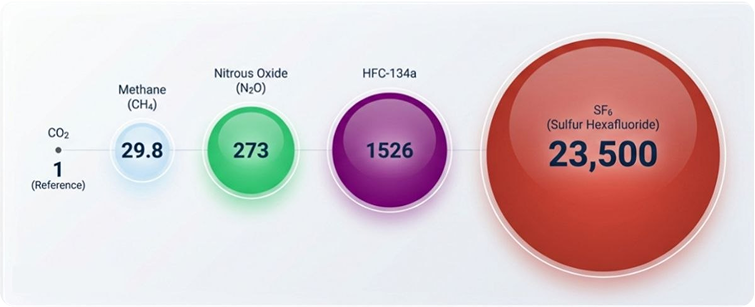
To solve this, scientists at the Intergovernmental Panel on Climate Change (IPCC) studied the thermal impact of each gas, leading to the concept of Global Warming Potential (GWP). To simplify calculations, Carbon Dioxide (CO2) was assigned a baseline value of 1. The thermal impact of all other greenhouse gases is then measured relative to CO2.
Keep scrolling
What do these numbers mean?
These figures indicate that emitting 1 ton of CH4 into the atmosphere has the same warming effect as emitting 29.8 tons of CO2. Similarly, 1 ton of N2O is equivalent to 237 tons of CO2 over a 100-year period.
Example Calculation:
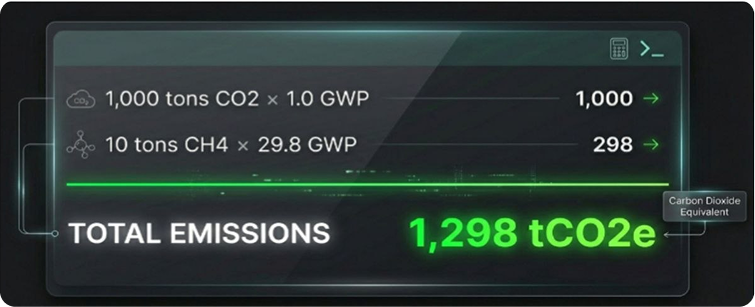
If a company emits 1,000 tons of CO2 and 10 tons of Methane, the calculation would be:
Keep scrolling
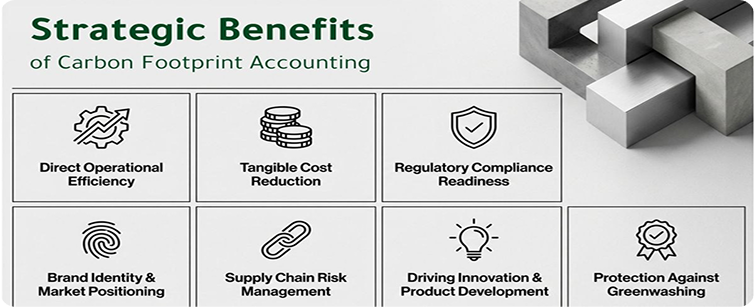
What are the Strategic Benefits for Your Organization?
- 1.
Direct Operational Efficiency
Calculating your carbon footprint acts as a diagnostic tool for resource and energy waste. Through data analysis, organizations uncover hidden opportunities to optimize processes, leading to reduced consumption and increased productivity.
- 2.
Tangible Cost Reduction
There is a direct correlation between carbon and cost. Reducing emissions translates to lower utility bills, fuel expenses, and waste management costs. An organization that tracks its footprint is one that effectively controls unnecessary expenditures.
- 3.
Regulatory Compliance Readiness
Environmental legislation is accelerating globally. Measuring now protects your organization from 'regulatory shock' and ensures you are legally sound before reporting becomes mandatory (as it already has in many countries).
- 4.
Brand Identity & Market Positioning
Today's clients and partners demand transparency. Disclosing your carbon footprint demonstrates professionalism and corporate responsibility, fostering loyalty and attracting sustainability-conscious stakeholders. Furthermore, many major corporations now require 'Carbon Footprint Reports' as a prerequisite for vendors.
- 5.
Supply Chain Risk Management
It helps you identify risks within your supply chain. If a supplier relies on high-carbon production methods, your business could be vulnerable to future carbon taxes or supply disruptions. Proactive measurement allows you to secure your operations in advance.
- 6.
Driving Innovation & Product Development
The drive to decarbonize encourages 'out-of-the-box' thinking. This leads to the creation of smarter products and the adoption of cutting-edge technologies that place your organization at the forefront of industry innovation.
- 7.
Protection Against 'Greenwashing'
Instead of making vague environmental claims that could invite criticism or legal scrutiny, a carbon footprint provides solid, data-driven facts. Authentic data protects your reputation from accusations of environmental misinformation.
Keep scrolling
How Can You Calculate Your Footprint?
In this article series, we provide a concise guide to carbon accounting according to the GHG Protocol methodology: