Scope 3 is considered the most complex part of carbon footprint reporting as it covers the 'Value Chain'. It includes all indirect emissions that occur outside the company's direct control but are an inherent part of its value chain. The importance of this scope lies in the fact that it usually constitutes the largest percentage of an organization's carbon footprint, making it the primary driver for achieving Carbon Neutrality. Calculating this scope requires high precision in tracking activities, starting from raw material extraction all the way to how the end consumer disposes of the product.
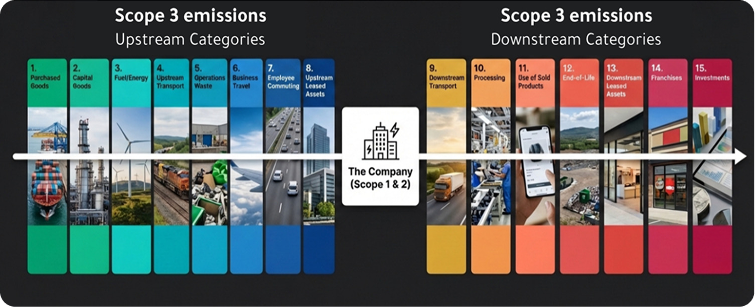
To organize the accounting process, the GHG Protocol has categorized these activities into 15 specific categories covering all aspects of corporate operations.
Keep scrolling
Upstream Categories
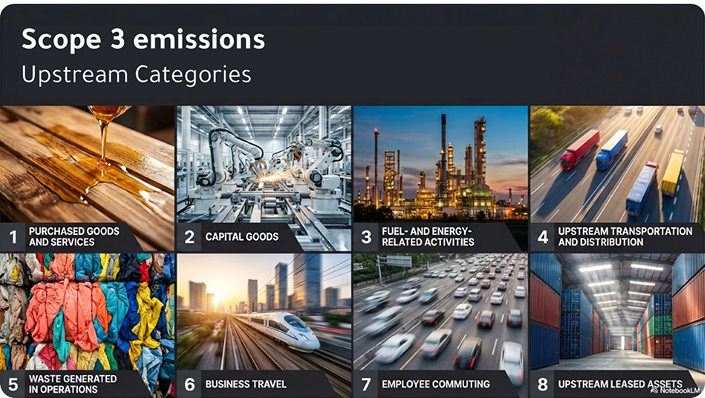
These categories focus on activities related to the 'Inputs' the company needs to operate. They include greenhouse gas (GHG) emissions from the point of raw material extraction until they reach your company's gate, in addition to activities supporting employees and daily operations. Measuring these categories requires close cooperation with suppliers and service providers to ensure the accuracy of data related to the company's logistical and operational purchases. Upstream categories include 8 sub-categories:
| Category & Title Brief | Brief Definition | Practical Example |
|---|---|---|
| Category (1): Purchased Goods and Services | All raw materials or services purchased by the company for daily use ("consumable" materials that enter production or operations). | A furniture manufacturing company purchasing wood and glue from suppliers. |
| Category (2): Capital Goods | Fixed assets purchased by the company that last for a long period (infrastructure including equipment or buildings, not consumables). | A company purchasing large manufacturing machinery or computers for employees. |
| Category (3): Fuel- and Energy-Related Activities | GHG emissions during the stages of extraction, production, and transportation of energy used in the facility (excluding direct combustion or electricity consumption by the facility). | Emissions resulting from the extraction, refining, and transportation of diesel used in generators (Well to Tank "WTT"). |
| Category (4): Upstream Transportation and Distribution | Shipping raw materials from the supplier to you via a third party (using transportation means you do not own or control). | Hiring a shipping company to transport raw materials from the port to the factory's warehouses. |
| Category (5): Waste Generated in Operations | Treatment and disposal of waste generated from the manufacturing process (not waste related to the final product after the end of its life cycle). | Sending fabric scraps from garment manufacturing to a recycling company. |
| Category (6): Business Travel | Travel by administrators for exceptional tasks such as marketing or closing deals via external transportation (planes/trains); excludes daily commuting. | Booking a flight for a project manager to inspect a worksite in another country. |
| Category (7): Employee Commuting | Daily routine movement of employees between home and the workplace (if conducted via private means not owned or operationally controlled by the company). | Calculating emissions from employees' private cars during their morning commute. |
| Category (8): Upstream Leased Assets | Operating assets that your company leases from other parties and uses (your company is the 'Lessee' and does not operationally control those assets nor is directly responsible for their emissions). | Leasing warehouses inside a port to receive raw materials (but the facility does not manage them itself). |
Keep scrolling
Second: Downstream Categories
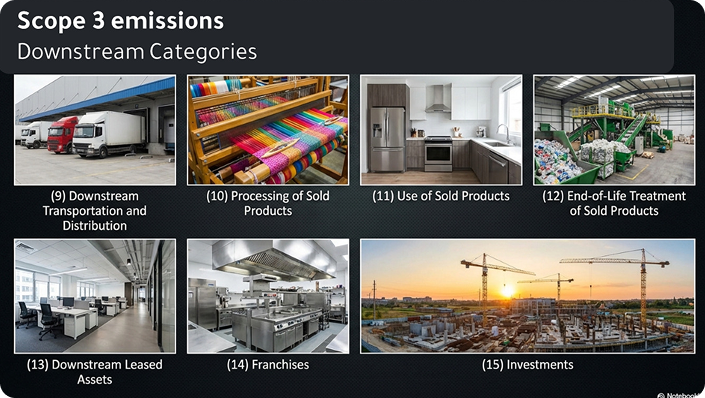
These categories cover emissions after a product leaves the company—the "Product Life Cycle" after your gate—including downstream transportation and distribution, processing or use of sold products, end-of-life treatment, downstream leased assets, franchises, and investments.
| Category & Title Brief | Brief Definition | Practical Example |
|---|---|---|
| Category (9): Downstream Transportation and Distribution | Shipping finished products or delivering services to customers through third-party logistics you do not own or operationally control. | A beverage producer contracting carriers to deliver pallets from regional DCs to retail stores. |
| Category (10): Processing of Sold Products | Downstream processing of intermediate products sold to third parties before end use. | Selling polyester fiber to a textile mill that weaves it into fabric for apparel brands. |
| Category (11): Use of Sold Products | Emissions from the use phase of goods and services—including energy or fuels consumed when customers operate what you sold. | Household electricity drawn by appliances sold under your brand during their rated lifetime. |
| Category (12): End-of-Life Treatment of Sold Products | Waste treatment and disposal of products after consumers discard them. | Landfilling, incineration, or recycling logistics for packaging once it leaves the consumer. |
| Category (13): Downstream Leased Assets | Assets owned by your organization and leased to others where emissions stem from lessee operations. | Leasing fleet vehicles or manufacturing plants to partners who operate them day-to-day. |
| Category (14): Franchises | Emissions from franchise locations operating under your brand but outside your operational boundary. | Energy use and refrigerants at franchised quick-service restaurants bearing your trademark. |
| Category (15): Investments | Attributed emissions from equity investments, loans, or project finance—often reported as financed emissions. | A minority equity stake in an industrial joint venture allocated proportional Scope 1 & 2 emissions. |